Choosing a yoga mat: thickness, material and what to bring to class
You may not need to buy one yet. If you do, here is what thickness, material and grip mean, in plain words.
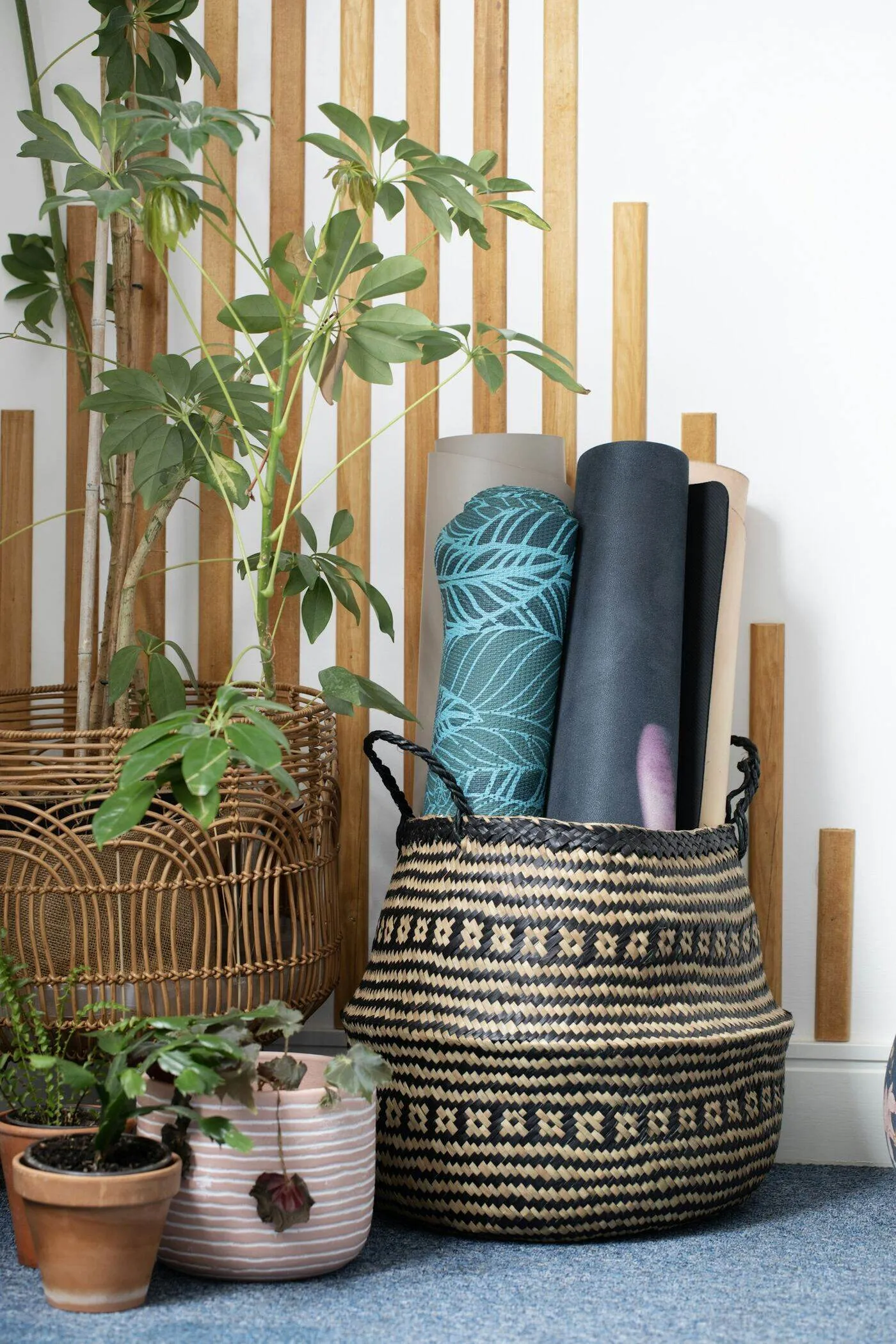
About 3,600 people a month in Thailand search for เสื่อโยคะ (yoga mat) (Google Keyword Planner, Thailand, October 2025 to September 2026). Most of them are shopping. FeelCore does not sell mats and has no favourite brand, so this guide only tells you what to look for, and when you do not need to buy one at all.
The short answer
For a first class, you often do not need a mat of your own: many studios have mats to borrow or rent. If you want one, a standard mat (commonly about 3 to 5 mm) with a non-slip surface is the usual starting point. Ask the studio what it prefers, especially for hot yoga and for aerial classes, which do not use a floor mat in the same way.
Thickness
The mat that feels right depends on the class and on your body. Thin mats feel closer to the floor, which many people find steadier in balances. Thick mats put more between you and the floor, which many people like for kneeling and for hands and wrists.
If you are unsure, start in the middle. You can tell in two or three classes whether you want thinner or thicker.
Material
Mats are made from a few materials. What follows is what is commonly said about each; makers and individual mats differ, so read the label.
- PVC: widely sold, usually durable and easy to wipe clean. Often has good grip. It is plastic, so people who care about that look at the alternatives.
- Natural rubber: often very grippy and a little heavier. It can smell for a while when new. It is not suitable if you have a latex allergy.
- TPE: a plastic foam that is often lighter than PVC and sold as a lighter-footprint option. Grip and lifespan vary.
- Cork: a cork top layer, often on a rubber base. People often say the grip improves when hands get damp.
- Cotton or jute: woven mats and rugs, used in some traditional styles, usually folded. They need a non-slip layer underneath on a smooth floor.
Grip
Grip matters more than most beginners expect, especially in Bangkok's heat, when your hands get damp. In a shop, press your palm into the mat and slide it. A good grip resists sliding. At home, check it with a damp hand as well as a dry one.
Length and width
Standard mats are commonly about 180 cm long and 60 cm wide. If you are tall, a longer mat means your head or feet will not leave the mat in lying poses. Wider mats give room to move, and are heavier.
Weight and carrying
You will carry it on the BTS or MRT, so think about weight. Thin mats fold or roll small. Thick or rubber mats are heavier and bulkier. A strap or a bag makes a mat easier to carry. If you walk or take a bike taxi, you may want the lighter one.
Cleaning
Check the maker's label first. Most people wipe the mat with a damp cloth and mild soap after sweaty classes, let it dry fully, then roll it. Rolling a damp mat is how it starts to smell. Avoid leaving a mat in a hot car or in direct sun, which can damage some materials.
Bring your own or use the studio's?
A personal mat is the same every time and you know how clean it is. The studio's mat means nothing to carry. Many studios rent or lend mats, and some include them in the class price. Ask before you go. Our guide to types of yoga says which styles tend to be sweatier, and beginner yoga poses shows what you will be doing on it.
What to bring to class
- A mat, if the studio does not provide one.
- A small towel, especially for hot or sweaty classes.
- Water.
- Comfortable clothes that let you stretch.
- Ten spare minutes to arrive early on your first visit.
Studios differ, so check the studio's page or ask. 78 yoga studios are listed on FeelCore.
Studios to look at
 Studio · Sukhumvit 4115 Studio YogaYogaE5Phrom Phong · 9 min walk · exit 3
 StudioAerial ONE studioYogaPK10Muang Thong Thani · 12 min walk
 Gym with classesChi The Spa At Shangri-La HotelYogaGymS6Saphan Taksin · 3 min walk · exit 1
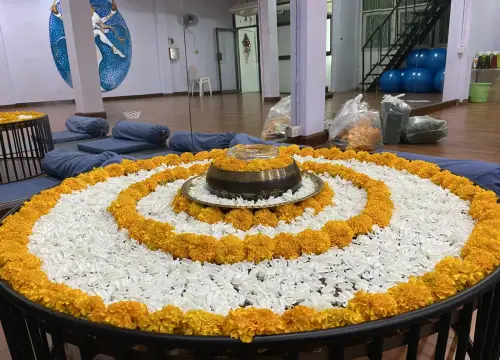 StudioEmbrace Energy Yoga BangkokYogaS2Sala Daeng · 5 min walk · exit 1
Prefer Pilates? Read what to wear to Pilates. For your first Pilates class, see your first class.
Questions
Do I need my own yoga mat?
Not always. Many studios lend or rent mats, and some include them in the class price. Ask when you book. If you go often, or like your own, a personal mat is handy.
How thick should a yoga mat be?
Standard mats are commonly about 3 to 5 mm. Thinner mats give more feel of the floor and are lighter to carry; thicker mats give more cushion but can feel less steady in standing poses.
Can I use a Pilates mat for yoga, or the other way round?
Pilates mats are often a little thicker than yoga mats, to cushion the spine when you lie and roll. Either can work on the floor, but a studio may prefer one. Ask the studio.
How do I clean a yoga mat?
Check the maker's label first. Most people wipe it with a damp cloth and mild soap, let it dry fully, then roll it. Avoid leaving it in a hot car or direct sun, which can damage some materials.
Studio counts come from the FeelCore listings and update when they change. Nothing here is medical advice; if you are pregnant or have an injury, ask your doctor and the studio first.